
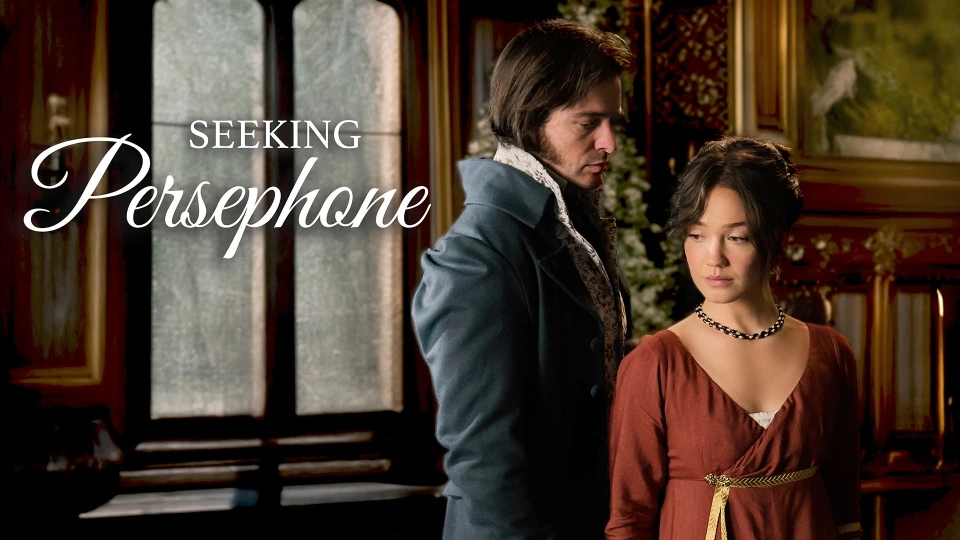
Seeking Persephone
SHOW TYPE

TV
SHOW LENGTH

43 min
PROTECTION

TV-PG
RELEASED

2026



Impoverished Persephone marries the reclusive Duke, hoping his wealth rescues her family. She persists in connecting with the man beneath his scarred psyche and imposing estate. Grave peril forces him to risk vulnerability to protect her.
Persephone Lancaster, the eldest daughter of a widower scholar's six children, accepts a proposal from Adam Boyce, the reclusive, scarred Duke of Kielder, for the benefit of her family and their financial security.
Despite his harsh demeanor and emotional walls, understanding and love blossoms in this Regency-era romance that serves as a Beauty and the Beast-style retelling of the Hades and Persephone myth.

Community verdict · separate from the catalog
No community verdict yet · In the review queue
2 of 5 members have weighed in. 100% have not labeled it woke. Search already lists this title; a community verdict lands at five.
2 of 2 did not label it woke · 5 members to decide
Community rank · quality, not a gate
Rank it — a rank is a vote that it is not woke. The catalog waits on a verdict and a written review.
Report a mistake
Same rule as woke labels: one report, a written reason, and the community +1 or −1 it — once per member. A net +5 applies the change. Editors can also apply it immediately.
No mistake reports yet.
Sign in to report a mistake. One report per field, per member.
Woke labels
Members can file a published criterion and itemized evidence. Other members +1 or −1 that reason — once. If 10% of members who weighed in file a label, and a reason reaches net +5, that rank keeps the title omitted from the database. Weak labels do not.
No labels filed yet.
A review is on the record even before the verdict. The title still needs 90% of members not labeling it woke before a review can put it in the catalog.
Comments and reviews
Omar Quill
+8 cloutSep 12, 2026
I sat down with Seeking Persephone over two evenings because the episodes run a bit long and I am not one for rushing through a story that clearly wants you to notice every damp stone and every strained silence. It is a 2026 television series set in the Regency period, and it follows Persephone Lancaster, the eldest of six children belonging to a widowed scholar whose books have not kept the family from the edge of ruin. She first turns down a proposal from Adam Boyce, the Duke of Kielder, a man whose face and temper keep most people at a distance. Later she accepts, quite openly for the money that will keep her younger siblings fed and educated. That decision sends her north to a cold, imposing estate in Northumberland where the rooms feel larger than they need to be and the staff speak as little as their master does. The series spends a good deal of its early time showing her arrival and the small, awkward ways she tries to make a life inside those walls. She walks the grounds, asks about the gardens that have gone half-wild, and attempts conversation at dinners that consist mostly of the scrape of cutlery. The Duke, scarred from some earlier catastrophe the story reveals in pieces, answers her briefly or not at all. He keeps to his study and his own routines. Persephone persists anyway, bringing books, offering to read aloud, noticing when his hand shakes or when he avoids mirrors. I found myself following these scenes more closely than I expected, partly because the production takes care with the weather and the light. Rain streaks the windows for what feels like weeks. Fires burn low. The costumes look lived-in rather than displayed. As the middle episodes unfold, understanding begins to replace some of the frost between them. She learns why he sealed himself away, and he notices that she is not merely enduring the marriage for her family's sake. There is a stretch where she falls ill from the damp and he stays near her door, still refusing to soften in speech but altering his habits in quiet ways. The series is patient here, sometimes to a fault. Conversations circle the same points of trust and fear. Yet the patience fits the Beauty and the Beast shape the story openly borrows, and it also leans on the older Hades and Persephone frame without turning either myth into a lecture. When danger finally arrives—some external threat connected to the Duke's past and to people who want the estate or the woman who now lives in it—the pace tightens. He has to leave the safety of his walls and risk being seen, both by enemies and by her. The later hours show him choosing protection over isolation, and the cost of that choice is allowed to land without too much speechifying. The two leads carry most of the weight. The actress playing Persephone keeps her dignity even when the script has her explain her motives more than once; she never becomes a scold or a saint. The Duke is played with a stiff physicality that makes the scarred features and the guarded posture feel continuous rather than performed for effect. Supporting characters—the younger siblings back home, a handful of servants, one or two neighboring families—fill space without demanding it. I did notice the dialogue sometimes repeats its emotional points, as if the writers worried we might miss the thaw. A few sequences in the castle corridors go on longer than necessary, and the final confrontation resolves a touch neatly after all the careful buildup. Still, the production values hold steady. The Northumberland setting is photographed with a gray honesty that suits the mood, and the score stays under the scenes instead of announcing them. I am not a frequent viewer of period romances, so I came to this one without strong expectations. What I found was a solid, sometimes slow telling of a familiar bargain that turns into something warmer. The marriage-of-convenience frame is handled with straightforward attention to money, duty, and the slow work of two reserved people learning each other's habits. Nothing in the storytelling felt like it was checking boxes or correcting the audience. It simply stays with the isolation of the estate and the gradual decision to let another person inside it. By the end I felt I had spent enough hours with these characters to care whether they managed to keep what they had begun to build. The series is competent craft more than dazzling invention, but it respects the shape of the tale it set out to tell. If you want a Regency romance that remembers why the castle feels lonely before it remembers how to fill it, this one does the job without apology.